Ross Douthat, an opinion columnist at The New York Times, is leaving to join the CBS News program “60 Minutes” as a correspondent, the show’s executive producer said in a memo to staff on Tuesday.
Mr. Douthat is among a group of journalists joining for the show’s 59th season, which will premiere on Sept. 13. The writer Sebastian Junger and Gianna Toboni, a former Vice News correspondent, will become contributors, along with Trevor Phillips, a British journalist who joined CBS last month. Norah O’Donnell, the former anchor of “CBS Evening News,” will be a correspondent as well.
They are the first significant hires at the long-running Sunday program since CBS’s new editor in chief, Bari Weiss, orchestrated a shake-up that led to the departure of three top correspondents this spring, including the veteran journalist Scott Pelley.
Ms. Weiss has been trying to rebuild the “60 Minutes” staff in recent weeks after a tumultuous period. In moves that rattled the program’s personnel, she dismissed the correspondents Sharyn Alfonsi and Cecilia Vega, along with the show’s senior leadership team, including its former executive producer Tanya Simon.
In all seriousness, this is a trade that is likely to hurt both teams. It’s likely that whatever ideological DEI hire replaces Douthat at the Times will be worse (the astonishing return of Pamela Paul!) And, for that matter, given what Bari is trying to do to 60 Minutes the problem with Douthat isn’t really ideological — the alternative would presumably be Eli Lake or Niall Ferguson or Alex Berenson or some shit. It’s just that “columnist/podcaster” and “television journalist” are very different jobs, and Weiss still seems to not have the slightest grasp on this concept.
Anyway, for his first story, I suggest that Douthat spend some time in Alabama and Mississippi and then in Seattle and San Francisco, and be forced to live one of either the former or latter two for a year. I would actually watch that, but alas we’ll probably get “is it bad when women are allowed to join the workplace?” instead. (Come to think of it, I’m surprised that Weiss hasn’t tapped Helen Andrews yet. Maybe she’s seeing if Olivia Nuzzi is available first.)
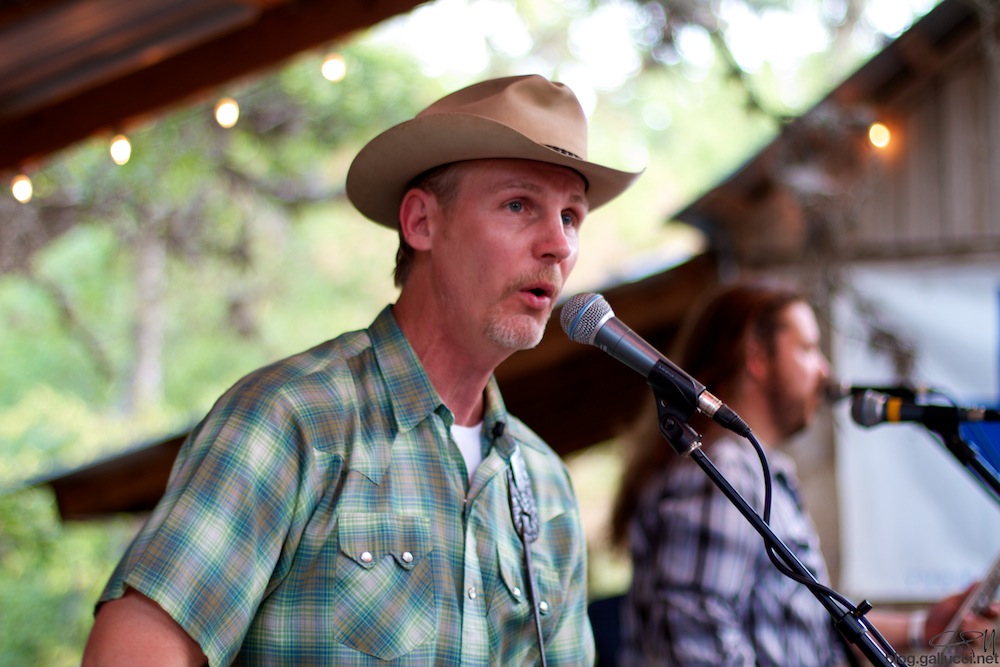
This is Newport Folk Festival weekend, so I won’t be around for the comments here until later. Next week will be the recap of the festival. As I didn’t have a lot of time in Chile for writing these posts, I still had one show from May that I had not discussed. When I went to see my brother in Texas in May, I saw that Max Stalling was playing at Dan’s Silver Leaf in Denton. Now, Dan’s is one of those great places that is everything good about Texas. It basically hasn’t changed in 20 years either. It’s still the home of cheap beer, smoking on the patio, and the best singer-songwriter Texan music that exists. I saw James McMurtry there. I saw Dale Watson there. I saw Turnpike Troubadours there when they were just another semi-popular Texas band. Enough of this type of artist still rises up too that it’s not just ancient singers holding on like at a lot of folk spaces. Max Stalling is just one of those guys who is a big deal in Texas and almost totally unknown outside of it, a very fine singer and songwriter making damned fine country music, in tandem with his wife Heather on fiddle and a quite good band. The opener was super fun too, Matt Hillyer, the singer of Eleven Hundred Springs, almost the prototypical Texas band that never made it outside of Texas but played forever inside the state. A show like that, it’s basically the best of what Texas offers to the world.
Other News:
I’ve seen a few music documentaries recently worth discussing. I have never been a fan of Brian Eno or his work or that whole scene, but I didn’t regret watching Gary Hustwit’s recent documentary on him. The documentary is called a “generative documentary” in that some of the film changes each time you watch it based on a random number generator. This seems incredibly dumb to me though evidently it really does take several viewings to see most of the scenes. Once seems enough for my purposes. But I guess it represents a kind of spirit of Eno messing around with electronics and in fact, he wanted the film this way because of course he did. What’s more interesting about the film to me is the inability by Eno or Bowie or anyone else to describe exactly what it is that Eno ever did. He’s just kind of a spirit or a house intellectual. He doesn’t really play a lot and certainly never played a lot of notes when he did. But who could possibly overstate his influence on culture in the last 50 years? He’s an interesting guy, if nothing else. And for me, really it doesn’t go too far beyond that.
I also watched This Ain’t No Mouse Music, the 2013 Maureen Gosling & Chris Simon documentary about Arhoolie Records founder Chris Strachwitz, who was one of these massive American folk music obsessives from the early 60s who decided he needed to record everyone he could and save all this old culture. A German immigrant, he brings a certain sense of, er, purity culture to it all. Yeah, he festishized the fuck out of American folkways. But he also found Mance Lipscomb and Lightnin’ Hopkins, did an enormous amount of work to save old conjunto records from the border region, helped make relative stars of Clifton Chenier and Flaco Jimenez, I mean you take him being a total crank for all this. And he was definitely a total crank and pretty clearly a gigantic asshole when he didn’t get his way, the film doesn’t even pretend to hide this. Of course, lots of commentary from other musicians about him in the film.
Finally, I watched Kavery Dutta Kaul’s 1988 film One Hand Don’t Clap, about the calypso scene in Trinidad, mostly around Lord Kitchener but also some around Calypso Rose. It’s alright as a film. I’m not a huge calypso guy and the material on the socio/cultural side of all this is a bit more marginal to it than I’d like, so I’d say this is basically OK, with some good footage and some spirited performances. But it’s really better for active fans of the music than your more casual viewer, like me.
Palace Brothers, There Is No-One What Would Take Care of You
Joe Ely, Live at Liberty Lunch
Emily Scott Robinson, Appalachia
Margo Price, All American Made
Nicholas Hodges/Fred Sherry/London Symphony Orchestra, The Music of Elliott Carter, Vol. 7
Quantic/Alice Russell, Look Around the Corner
S.G. Goodman, Planting by the Signs
Nico Segal, Surf
Mourn, Self Worth
Loretta Lynn, Van Lear Rose
Harriet Tubman/Georgia Anne Muldrow, Electrical Field of Love
Priests, Bodies and Control and Money and Power
Buddy and Julie Miller, In the Throes
Charlotte Gainsbourg, IRM
Sharon Van Etten and the Attachment Theory, self-titled
Whitney Rose, Rosie
Max Roach, We Insist! The Freedom Now Suite
Neil Young, Hitchhiker
Dave Rawlings Machine, Nashville Obsolete
Leonard Cohen, Ten New Songs
Jim & Jennie & The Pinetops, One More in the Cabin
Missy Raines & Allegheny, Love & Trouble
The Alan Lomax Collection, Vol. 1
Charlie Rich, Behind Closed Doors
Jose Gonzalez, Veneer
Tropical Fuck Storm, Brain Drops
Empress Of, I’m Your Empress Of
Sun Mi-Hong, Fourth Page: Meaning of a Nest
Django Reinhardt, Djangology 49
McCoy Tyner, Together
Buddy Tabor, Writing on Stone
Led Zeppelin, IV
Ken Pomeroy, Cruel Joke
Tom T. Hall, The Storyteller
Mitski, Laurel Hell
Stevie Wonder, Songs in the Key of Life, disc 1
John Coltrane, Giant Steps
Bill Frisell, Floratone
Dave, Psychodrama
Chris Stapleton, Traveller
Hank Thompson, Seven Decades
Lorelle Meets the Obsolete, De Facto
Loudon Wainwright III, Unrequited
Eric Taylor, self-titled
Sunny Sweeney, Trophy
Christopher Paul Stelling, Itinerant Arias
Gary Stewart, The Essential
Bonnie Prince Billy, We Are Together Again
Bobby Bare, The Winner and Other Losers
Merle Haggard & Bonnie Owens, Just Between the Two of Us
Album Reviews, something of a Newport Folk Festival prep week for me:
Feeble Little Horse, Bitknot
I’m not going to make any huge claims that this Pittsburgh band is a great rock outfit exactly but I do like them quite a bit. Lydia Slocum is a very good vocalist and I do like the juxtaposition between the often singer-songwriter through shoegaze sort of vocals and the very loud rock and roll sound between them. I guess you could say the same thing about MJ Lenderman, who is the prince of indie rock these days, even though I don’t really think he deserves that title. Girl With Fish really got me as the type of rock album I like a lot. Bitknot, the new album, ain’t bad either. The sound is heavier here, which raises the contrast with the vocals. Sometimes, I wish the vocals could match that intensity. The theme: it sucks to be in your 20s. These days, it’s hard to argue with that, not with the horrors the internet and AI have unleashed on the world, subjects of these songs. Ain’t much better in your 50s though, so at least they have that to look forward to.
B
Mavis Staples, Sad and Beautiful World
Any new Mavis Staples album is a treasure. Her voice isn’t what it was 50 years ago, but whose is? She’s still a force and one of the things I treasure her for is her mentorship of young musicians. She is all over Newport Folk, even if she isn’t on the schedule. Last year, I saw her come out and play with Lucius because of course she did. Can you imagine Mavis Staples wanting to sing with you? Must be amazing. Anyway, she doesn’t hide herself away like lot of older musicians or just ignore the present. She doesn’t have some belief that her heyday was the best. She knows that there’s great music now just as there was then and she wants to be part of that.
So one of the really nice things about her new album is that she has great tastes in songs that aren’t just covering another Dylan tune. She starts here totally reworking the Tom Waits song “Chicago.” And then she goes right into a touching version of Kevin Morby’s “Beautiful Strangers,” which is a very nice song both here and on Morby’s album, about gun violence. There’s covers of Sparklehorse’s “Sad and Beautiful World, ” Gillian Welch’s “Hard Times,” Curtis Mayfield’s “We Got to Have Peace,” and then Eddie Hinton’s “Everybody Needs Love” to close the album, a song that got revived by the Drive-By Truckers about 15 years ago. There’s also a new track written by Hozier and Alison Russell. Staples basically rethinks the idea of the Great American Songbook to realize that there are great songs written in the past but there are just as many great songs written today. The band, which includes MJ Lenderman and hosts of other first rate and mostly youngish musicians, is first rate. It’s like the spirit of Newport Folk in one album by one of the greatest artists to ever sing in this nation. Also, good for her to recognize that the old songs are not better than the new songs, and this from a woman who not only loved Dylan’s music but who had a marriage proposal from Bob.
A-
Altun Gün, Garip
I ran across one of this Turkish band based in Amsterdam’s album last year and loved its rock-psych-garage Turkish feel. So when I saw there was a new album, I had to hear it. Turns out it’s pretty damn good! I don’t know that there’s really any big difference than their previous work, but, well, I will say this: I would absolutely prioritze the hell out of seeing this band at Big Ears if there’s any way to make that happen.
Akinmusire and Halvorson are two of the real geniuses of contemporary jazz. This is project they’ve worked on for years. Is it OK to say that I don’t find it overly enjoyable? Yeah, it is. It comes down to much of the problem with a lot of duet jazz albums, which is that there’s not much to hold onto except for their rather occasional notes. For me, this is the kind of jazz that feels like an art project more than an album, not because they aren’t great at what they do. They obviously are, the technical skill is obvious. It’s because I just don’t much care to listen this sort of slowish album unless it manages to touch me in some way and this never quite gets there for me, with the exception of the last track on the album, which I thought quite powerful. It’s all good, they both have albums I love and I can listen to those.
B–
Billy Bragg, The Roaring Forty, 1983-2023
Bragg isn’t playing at Newport this year, but the one time I saw him was at Newport, two years ago. My general impression of him, both live and what recordings I’ve heard, is that I like him more in principle than in fact, as agitprop as songwriting can only go so far. So I like the idea of listening to his 40th anniversary collection, which is 40 songs, to set my thoughts on a stronger foundation. I have a few. First, no one should listen to this much Billy Bragg at one time. Second, he sure has grown as a vocalist over the years. His early tracks–many of which include his best songs, such as “St. Swithin’s Day” are pretty rough, which makes sense since his roots are in punk, but the solo voice with electric guitar didn’t always serve him that well. Third, his best songs really are great. Fourth, I never need to hear that version of “The Internationale” again. Or any version, for that matter. Fifth, he has a great knack for writing a political song overnight, but they don’t always hold up. Sixth, he sounds so good with Wilco backing him up on the Mermaid Avenue tracks, most of which are included here. Bragg is in the end not a great artist, but I am glad he is out there. I just need to hear a track now and then rather than whole albums.
B+
Lone Justice, Viva Lone Justice
The early 80s LA scene was incredibly fertile–X, The Blasters, Los Lobos, Concrete Blonde, Dwight Yoakam, Tom Waits as older but still around, all these people were hanging out and learning from each other. One of the greatest, if short-lived, bands from this scene was Lone Justice, the early alt-country outfit helmed by Maria McKee, who would go on to have a good, if not transcendent, solo career. I picked up an EP of there’s called The Western Tapes, which is 20 minutes long and which has become one of most listened to albums. In 2024, the band went back and put this release together from old material updated with some modern dubs. It shows what a band this could have been had Geffen not ruined them, a classic tale of a major label fucking up something great. At times, she sounds like Exene, other times you are hearing fiddle tunes. There’s also a refreshing lack of the brittle 80s production values that were so terrible for bands like this (seriously, of every rootsy/songwriting artist or band who started in the 60s and 70s, who was actually putting out good material in the 80s, other than Richard Thompson? It’s grim). The wide variety of styles here means it doesn’t quite cohere as a great album might, but it’s certainly a fun listen at the least. Plus she has the balls to cover “I Will Always Love You” and does a pretty good job of it because she doesn’t try to hit that Dolly/Whitney high note AND follows it directly with MC5s “Sister Anne.” How can you not love that?
A-
Hayley Williams, Ego Death at a Bachelorette Party
I like Hayley Williams and her old band Paramore just fine. Why she is closing the Friday set at Newport it an interesting question. By the time this post is published, I will have already decided whether to deal with the traffic jam at the end of the day in order to see this. Probably I won’t. I wouldn’t mind seeing her at all, but you have to then get home like 3 hours later than you would otherwise. It’s a big commitment.
I have little interest in hashing out the meaning of “folk music” in 2026 and Newport has long ago put away Bob Dylan and Joan Baez. So in 2026, I guess Hayley Williams closes a day here because anyone who writes their own songs and plays a guitar is “folk” music. Well, so be it, I suppose.I will say one thing where this makes sense–Williams is a very good songwriter. The title track, about “I’m the biggest star at this racist country singer’s bar/No use shootin’ for the moon, no use chasing waterfalls” is pretty great. The following track, “Hard” is a banger as well. Why can’t folk music be completely contemporary with contemporary production anyway? Don’t ask Chris Strachwitz that though.
B+
As always, this is an open thread for all things music and art and none things politics.
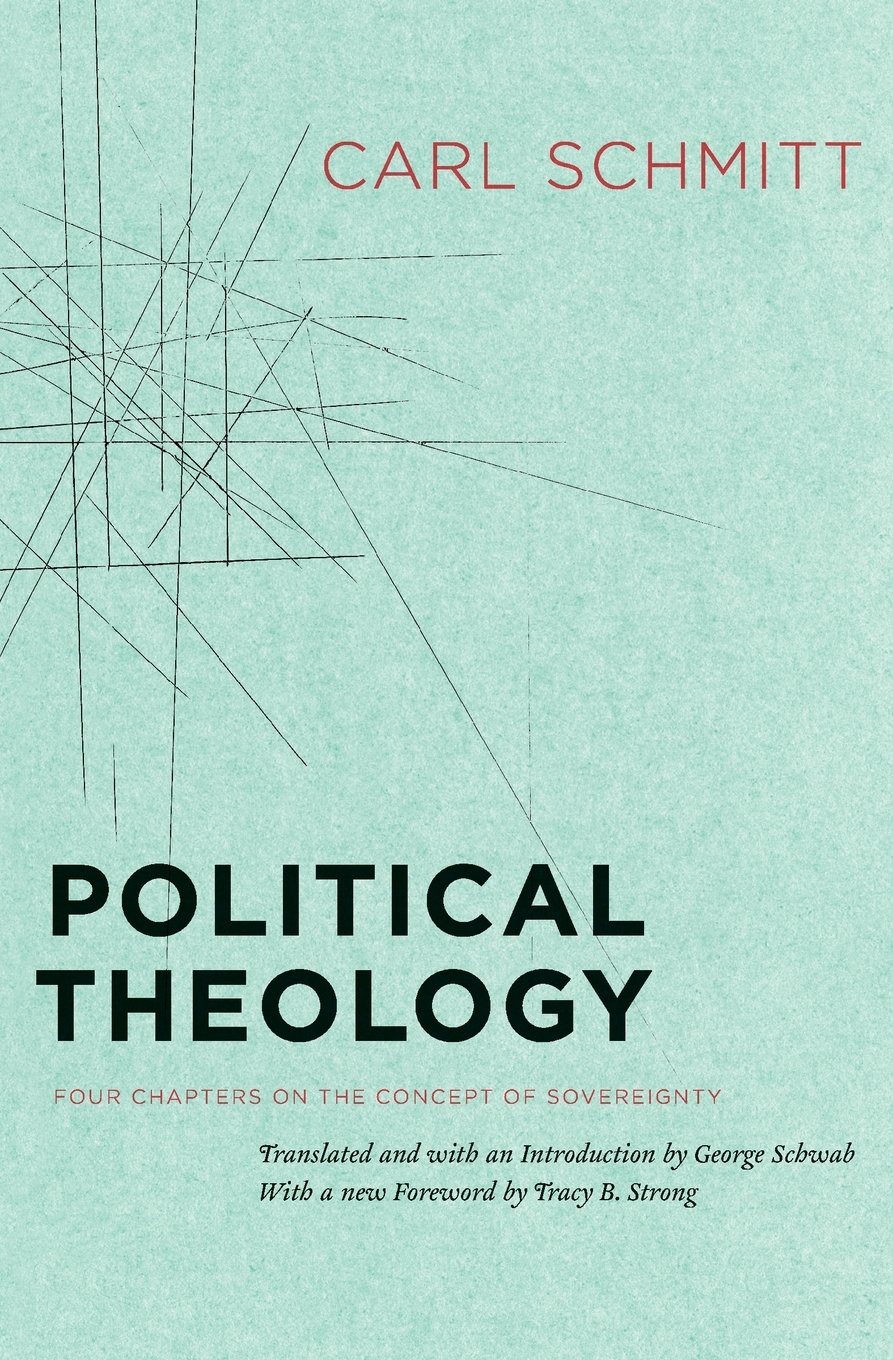
Carl Schmitt’s Political Theology, University of Chicago (2006) edition
Back during the first Trump administration, I sometimess encountered a subtype of ‘resistance’ Twitter user. I don’t have a clever name for them, but they would occasionally show up in my replies. Their basic shtik, sometimes accompanied by a ‘meme,’ was that Trump was fundamentally illegitimate. The reasons why varied. But the most common was that Russian electoral interference rendered his presidency inherently extralegal. In consequence, they claimed, everything he had done — the laws that he signed, the international agreements he made, and, in particular, his judicial nominations — were null and void. Thus, when Democrats retook power, they could magically undo them.
My typical response can be a summed up by a now-venerable — because the half-life of online mimetic culture is very, very short — ‘reaction .gif’:
Russian election meddling might render Trump’s election illegitimate in a substantive and normative sense. This is what Hilary Clinton meant in a comment that launched a thousand false equivalencies. Despite its violations of campaign-finance laws, I don’t think one can dispute that Trump won a free and fair election — at least by our admittedly decaying standards.
By way of comparison, consider Mitch McConnell’s embargo of Merrick Garland’s nomination and his subsequent handling of the Amy Coney Barrett nomination. The first violated an informal, long-standing process norm; the second violated the rule that supposedly overrode that norm. But McConnell’s actions were lawful. They satisfied narrow, formal criteria for procedural legitimacy. They were also normatively illegitimate. (I don’t think we need to make a complicated argument here about republican values, principles of fairness, or whatever. McConnell himself believed that his actions were illegitimate under controlling norms and principles. Otherwise he would not have felt compelled to invent new, superseding ones.)
There’s also another problem with this niche variant of ‘resistance’ argumentation. There are no plausible mechanisms available for ‘voiding’ an entire presidency. In the case of Trump’s judicial appointments, the Democrats would need 67 votes in the Senate to remove them. If Democrats somehow get there on any given ‘Trump judge,’ it almost certainly would not be on the grounds that the appointments and confirmations were themselves illegitimate.,
Impeachment and conviction are not the equivalent of making a judicial appointment ‘null and void.’ They do not automatically invalidate a judge’s rulings. Nor does the successful impeachment of a president undo the legislation that they signed into law, expunge the executive orders that they implemented, or immediately rehire the civil servants that they fired.
So this sub-genre of ‘resistance’ discourse was a fantasy — one built on an extremely shaky premise. But the fundamental logic was… sound. We are under no obligation to respect either illegitimate practices or the outcome of those practices. Indeed, we have a presumptive, but not absolute, duty to undo them.
At least two of Trump’s first-term Court appointments were and remain normatively illegitimate. This gives future Democratic majorities both the legal and the moral right to respond by unpacking the Court. Indeed, Court unpacking is an appropriate response: it is both feasible and proportional. The Court has two members that lack the authority to compel our behavior. We cannot remove them, but we can ensure that outcomes always depend on the votes of legitimate justices.
More importantly, the first Trump administration did have a legitimacy deficit. The second Trump administration? It long ago forfeited any claim to legitimate rule. Its offenses against the law and the Constitution are too numerous to list here. Each day brings a new betrayal of the public trust, the rules of law, or bedrock republican principles. If you want “evidence” then you can read any number of posts here.
I do want to return to the Supreme Court, though. While it seems clear that an overwhelming majority of Democrats view Trump as illegitimate, people have been slower to reject the Court’s authority. Even many pro-democracy legal elites seem, at least anecdotally, particularly reluctant to give up on the Court. They watch the anomalies accumulate, but they resist changing their paradigm.
But it is imperative that we stop according legitimacy to the Court. The Supreme Court is an existentialthreat to constitutionaldemocracy. This threat cannot be dismissed as ‘merely’ an ideological disagreement about outcome legitimacy (which, I recognize, is a strange thing to write about an institution that is systematically dismantling the foundations of American electoral democracy. But whatever). The Court has also lost any claim to procedural legitimacy. Which is kind of a problem for the branch of government most dependent upon rational-legal authority.* The Court is quite literally lawless. Justices affirm, or even pen, decisions that rely on incommensurable standards of adjudication. They are contemptuous of long-standing precedents, including ones that have guided decades of legislation. Their opinions are riddled with misrepresentations and fabrications.
The Roberts Court has, in essence, replaced the rule of law with a permanent state of exception — and appointed itself sovereign. Yes, it has often used that power to give legal cover to the Trump administration’s own lawlessness. But that is a symptom of its underlying corruption, not the rot itself.
Once we recognize the fundamental illegitimacy of the Roberts Court — and the threat it poses to democracy and the rule of law — the obvious response is reform: unpacking, stripping, and all the rest. But that’s not enough. We must treat the Roberts Court’s decisions as ‘null and void.” A Court that cares nothing for precedent loses the right to make precedent. The Court can choose to create a state of legal exception. We can honor their choice. We can treat their dictates as exceptional and, by definition, irrelevant to any Court, or any regime, that governs according to the rule of law
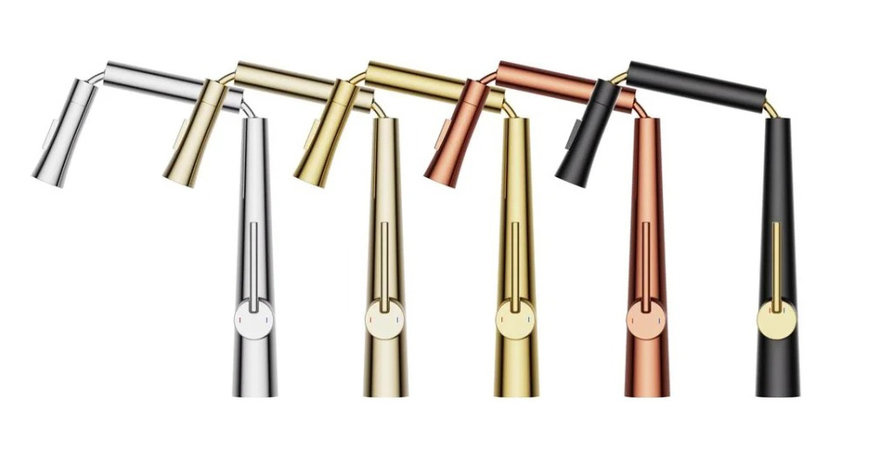
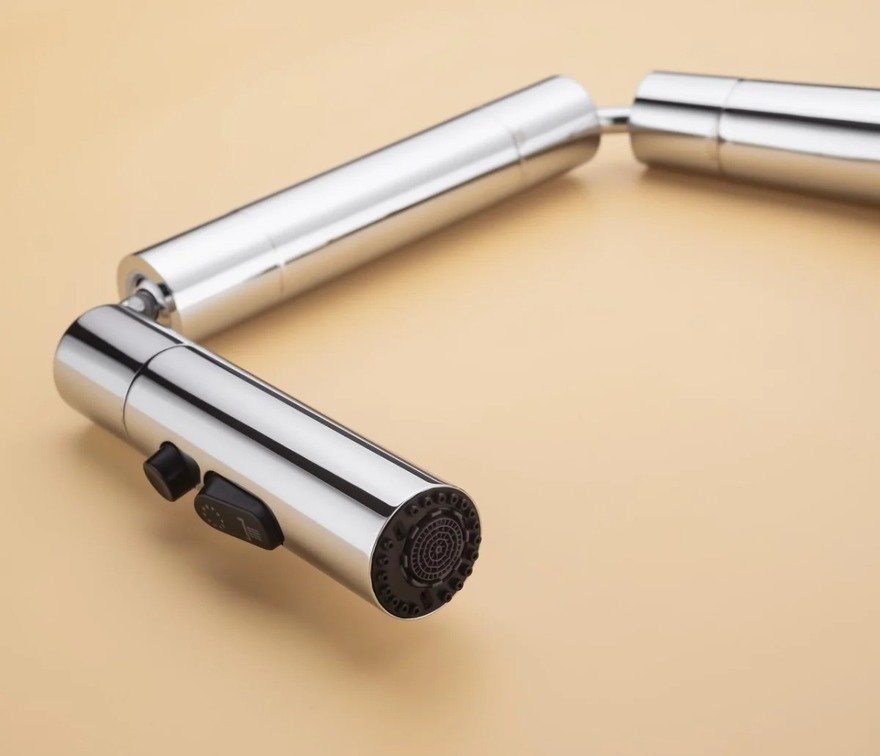
For thirty years, Wenzhou Dinggu Technology Co. made molds for manufacturers of bathroom fittings. In 2018, they decided to do their own thing and lean into design, forming a spin-off called AIM Faucet. The company now does OEM/ODM design and manufacturing for other brands.
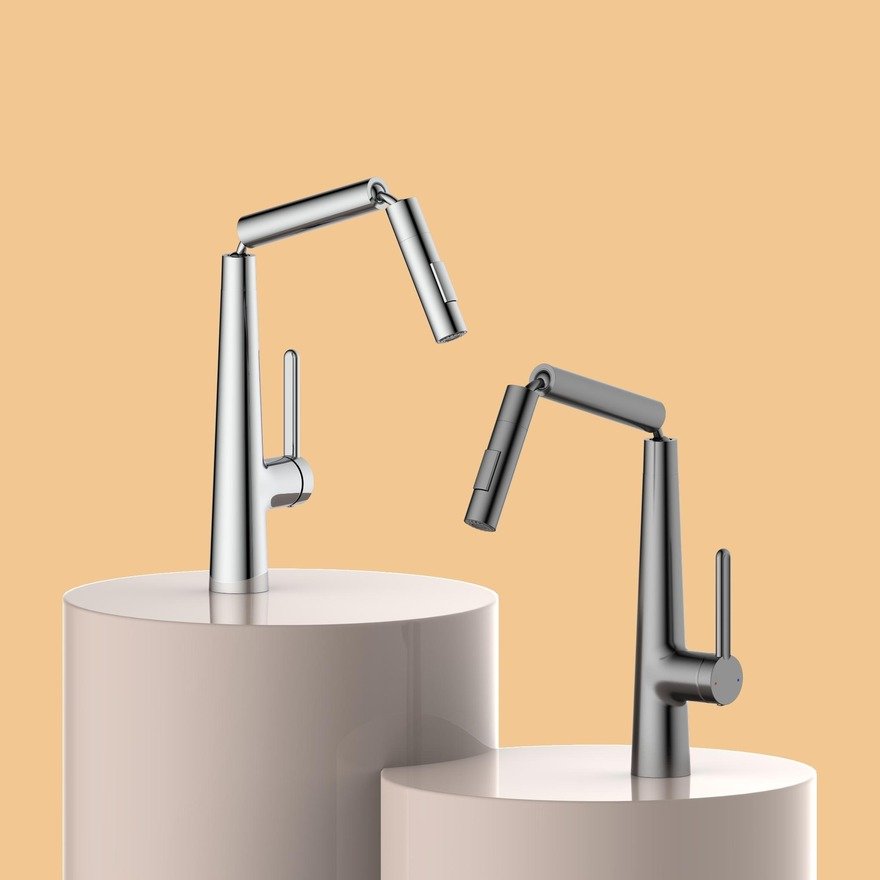
The faucet features a tri-sectional rotating system, where the faucet body, connecting arm, and spout move independently. This allows 360° sink coverage, reaching every corner of the sink and handling large pots or containers effortlessly.
Each segment can be adjusted freely, ensuring flexible kitchen faucet operation and eliminating the blind spots typical in conventional faucets.
Beyond its striking aesthetics, the faucet improves efficiency and usability, reducing countertop cleaning frequency while offering a premium dual water flow experience.
The question is: Now that this former moldmaker has bagged a coveted design award, how long until they become a brand in their own right, able to compete with Kohler and Grohe on the global market?
It’s worth having a discussion over Mamdani not dropping his attacks on Benjamin Netanyahu as a war criminal, saying he would like to arrest Netanyahu upon his entrance to New York, and admitting that while he does not in fact have that power, the U.S. should arrest Netanyahu upon entry to the United States and send him to the International Criminal Court for crimes against humanity.
Now, this description of Netanyahu is absolutely true, whether you want to dicker about whether what has happened in Gaza is a “genocide” or not. Personally, I think the academic definitions of this term are pretty lame–as a friend of mine who is a scholar of fascism notes, most of the people particularly concerned about this are Holocaust scholars defining everything that was not the Holocaust as not genocide. Fundamentally, genocide is a political term and within that context, the mass deaths of Palestinians in Gaza and the open calls to take over much of that land is ethnic cleansing or genocide or whatever, but it’s deeply evil and should be unacceptable for any nation. A decent country, were we one, would absolutely arrest that war criminal and deliver him over to the same process that Slobodan Milosevic went through, dying in prison.
To me, somewhat more interesting is how uncompromising Mamdani is on this because he knows he has the politics behind him. It’s things like this, as well as the war he’s declared on the Democratic establishment in New York, that has the New York Times conducting interviews with him with barely disguised hostility (the best part of this interview is him asking the interviewer what her favorite park is in the city, she replaying “Central Park of course” and him laughing in her face as a symbol of how out of touch Times people are). Like, he could not say these things at this point and his life would probably be easier. But that’s not what he is going to do. He believes in justice. He can’t run for president because he’s not born in the U.S., but he can be a huge mouthpiece for the left. As of this time, he’s been enormously successful. He clearly sees no personal downside in demanding justice in Gaza, something that no major American politician has been able to articulate for decades. And so far, he’s been right about everything important, at least from a political sense. It’ll be interesting to see how this sort of thing evolves.
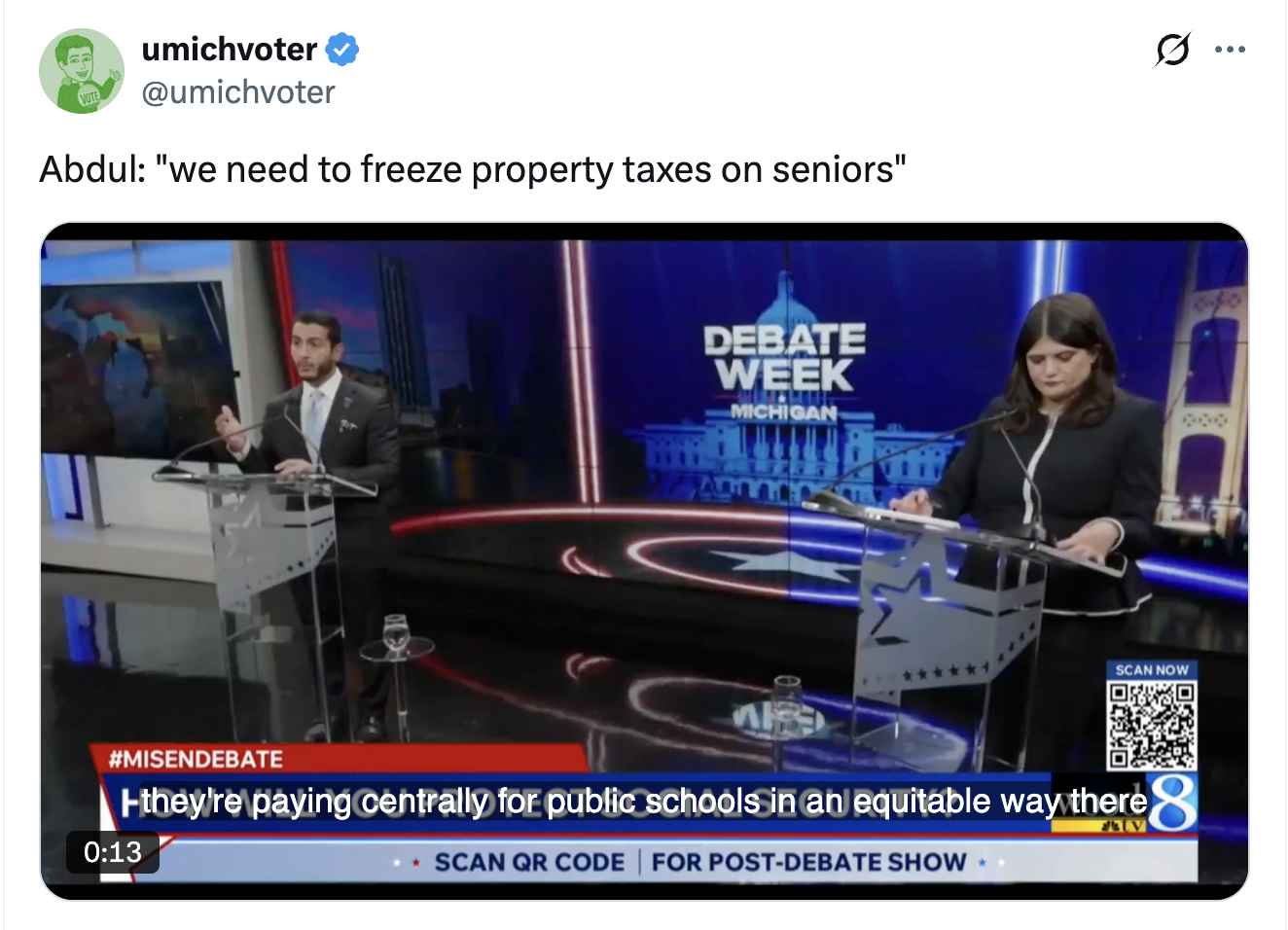
I am not saying this to take any position in the Michigan Senate primary — the candidate I most liked from afar dropped out and I am happy to defer to Michigan voters about the other two — and I don’t mind a little harmless pandering. But this is really not harmless:
The larger idea that you can fund a Scandinavian-style welfare state by only taxing BILLIONAIRES is a dangerous lie that fundamentally plays into Republican anti-tax tropes. The kind of safety net El-Sayed wants — which includes universal public health insurance more ambitious than Canada’s — requires higher taxes not only on the wealthy but on the middle class.
Current tax levels aren’t enough to properly sustain even the relatively modest social welfare commitments of the US right now.
Of all the groups to exempt from tax increases, seniors are the least deserving — this is flat-out upward wealth redistribution on balance. Moreover, providing incentives for seniors to stay in houses that could be used to house young families instead of downsizing is insanely bad housing policy.
It’s the least important point, but to me there’s something particularly amusingly unserious about “just tax the billionaires” as a universal solvent in the context of local property taxes. Can’t fund schools or police because your property tax base is shrinking? Just tax every billionaire living in Flint or Saginaw! Problem solved!
This is pernicious, reactionary bullshit, and if he’s the nominee I hope someone can convince him to cut it out.
Of all the groups to exempt from tax increases, seniors are the least deserving — this is flat-out upward wealth redistribution on balance. Moreover, providing incentives for seniors to stay in houses that could be used to house young families instead of downsizing is insanely bad housing policy.
I think of that every time I go into Takoma Park and see 1-2 retirees in a huge SFH while current parents are faced with grueling commutes. We should encourage downsizing, not penalize it.
 Log in