President Trump’s lingering unpopularity and intense frustration over his management of cost-of-living issues, in particular, have deepened Republican vulnerabilities as Democrats push to win control of both the House and Senate.
Likely voters favored Democratic candidates over Republicans by close to 9 percentage points in their congressional district — a metric that is closely watched by both parties as a leading indicator of political momentum.
Mr. Trump’s approval rating continued to languish at 38 percent among likely voters, essentially unchanged from the lows it sank to after he went to war with Iran. A majority of voters disapproved of Mr. Trump’s handling of every major issue included in the poll: the economy, immigration, tariffs, the war and, especially, the cost of living.
And voters said they trusted Democrats more than Republicans on not just health care and foreign wars but also on the two issues that powered Mr. Trump’s 2024 victory: immigration and the economy.
Some of this (especially on immigration) is class thermostatic reaction to incumbent overreaching, but Trump has actively made things worse and hence a backlash larger than the typical reaction against the in-party. The Iran War in particular is one of the most obvious political blunders I’ve ever seen in addition to being a huge strategic and tactical one.
Leaders of the John F. Kennedy Center for the Performing Arts, installed by President Donald Trump, say the center is on the brink of bankruptcy and argue that putting the president’sname on its facade — and thus ensuring his fundraising efforts — may be the only way to avoid imminent and “certain fiscal collapse,” according to documents obtained by The Washington Post.
The bleak assessment is laid out in a 57-page packet distributed to the center’s board of trustees ahead of a special meeting Tuesday, when the Trump-led board is scheduled to consider two resolutions aimed at addressing twin crises confronting the national performing arts center: one financial, the other physical. Center officials say they could be unable to make payroll or pay routine maintenance contracts “within a matter of weeks” and argue that publicly recognizing Trump could secure his help raising enough money to keep the institution afloat.
Center officials are also recommending that the board close its main building immediately, warning that remaining open would endanger lives. Board approval, which seems likely, means the center could close as early as Tuesday.
The presentation makes clear that Trump’s support hinges on getting public credit for his involvement. The financial resolution says Trump has offered to “raise the necessary funds to keep the Center from bankruptcy” while the building undergoes a sweeping renovation. But it says Trump is unlikely to provide “fundamental oversight” of that project or lead a financial rescue without “appropriate recognition” of his role.
Together, the two proposals represent a remarkable new phase in Trump’s takeover of the Kennedy Center, which has been engulfed by financial turmoil, leadership upheaval and litigation since he installed himself as chairman last year. Trump and his allies have repeatedly portrayed his leadership — and his name — as essential to rescuing the institution, even as ticket sales and fundraising have plummeted under their stewardship.
Trustees are being asked to choose among 10 texts that could be placed on the building’s exterior beneath its name, including one reading: “Renovation Restoration and Endowment overseen by President Donald J. Trump and the Trump Kennedy Center Fund.”
It’s far from Trump’s most important abuse of power, but between the illegality, the self-aggrandizement, and the mob capo logic it’s among the most illustrative.
On the soft regime-aligned side, enjoy this argument from Megan McArdle about how it was wrong for people to boycott the Kennedy Center in light of the Trump takeover, because Trump’s amorality meant that he couldn’t be persuaded, so people had no choice but to go along and keep buying tickets to Lee Greenwood Sings the Songs of Toby Keith or whatever else was being put on by Trump’s goons. Apparently Kennedy Center patrons did find this persuasive — one thing about Trump 2.0 is that it cleanly separates people who understand how to respond to a shakedown and people who don’t.
Knock it down. Far fewer than 99/100 Americans will never see the Kennedy center production of Chitty Chitty Bang Bang or the Four Tops. Call his bluff, we don’t owe the Kennedy’s anything more at this point.
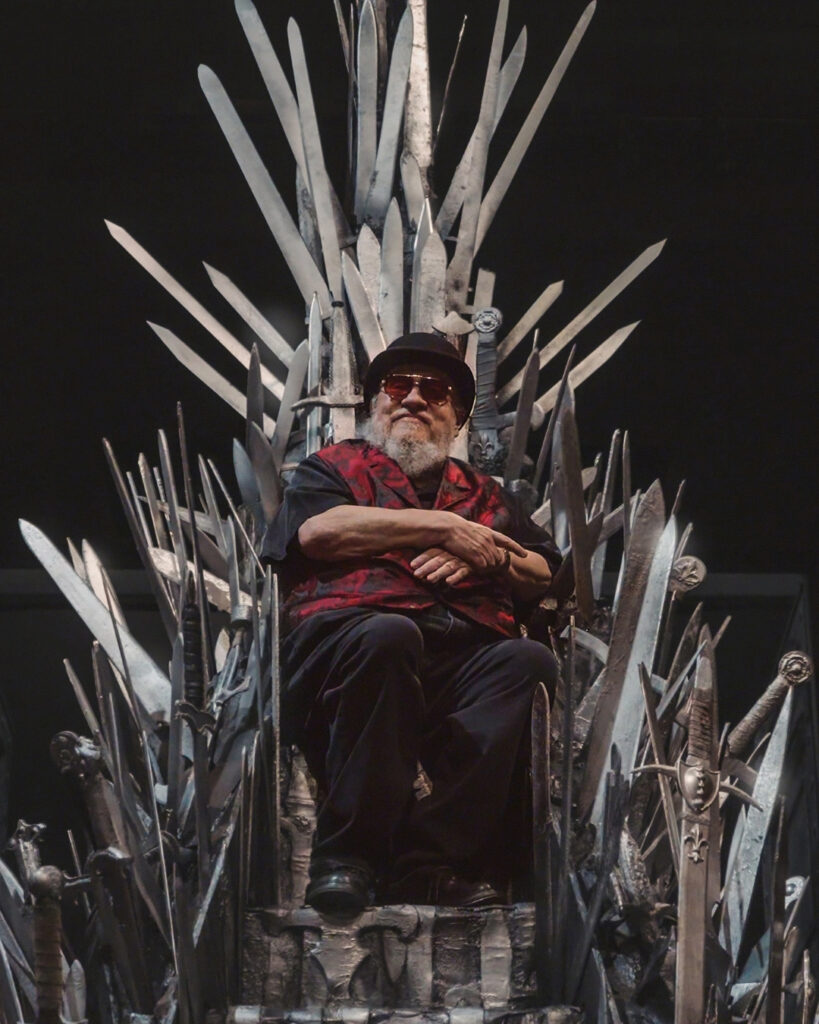
I had a splendid time in Stratford upon Avon for the premier of Duncan Macmillan and Dominic Cooke’s epic new stage production of Game of Thrones: The Mad King. And furthermore I’m thrilled to announce that the production will be moving on to London to share the experience with a wider audience.
New venue and premiere dates will be announced in due course, and if you would like to hear about new information feel free to sign-up at:
This is a meta-comment on Erik’s post and the subsequent thread on AOC possibly running for president in 2028.
It may be that in general victory has a thousand fathers while defeat is an orphan, but pretty much the opposite holds when it comes to punditry, amateur or professional. Political obsessives love to obsess about nothing so much as exactly why their party lost an election, especially a presidential election, and this tic expresses itself in what I find to be a very annoying way, which is this: Everyone presents their seat of the pants explanation as if it were a law of thermodynamics.
Example: Clinton and Harris lost to Trump because they are women and in the latter case a woman of color. This assertion, which is usually treated by those who make it as a self-evident fact, is basically just a guess, and not a very plausible one in my view. The reason its so superficially plausible is that it depends on the simple formula that since there’s a whole lot of racism and misogyny in American culture, a woman who loses an election to a man, and especially a non-white woman who loses to a white man, has lost because of all the racism and misogyny. It’s superficially plausible, but it’s also extremely superficial, period, because:
(1) The political science data suggest strongly that being a woman is not, all other things being equal, a disadvantage for candidates running against men. Now you can always say the presidency is different, but the evidence against this is that Clinton got three million more votes than Trump and lost (barely) on a freak EC distribution, and, when you take the massively anti-incumbent atmosphere in 2024 everywhere around the world into account, Harris actually did very well, losing one of the closer presidential elections in US history. So you have a sample of two, which by itself is very little meaning, and the evidence from that sample is at best very equivocal in regard to the hypothesis that gender and race were the decisive factors against the two candidates.
(2) Without re-litigating the whole thing I would bet all my LoomCoin and also a bunch of real money that Biden would have done MUCH worse than Harris, even without the catastrophe of the debate. Polls even from early in the cycle consistently indicated that the vast majority of DEMOCRATS didn’t want him to run again, for reasons that in retrospect are incredibly obvious, ESPECIALLY in a radically anti-incumbent context. The point here is this: if the debate hadn’t happened, or happened in October when it was too late to do anything about it, or hadn’t been a disaster, Biden would still have lost, by a lot, and I’ll bet all that LoomCoin on another proposition as well, which is all the people who are so certain that Harris lost because she was a woman POC would be saying that of course Biden got killed, who the hell thinks that the right strategy for Democrats in 2024 (a party of women and POC) was to run a 117-year-old white guy who might as well have had ESTABLISHMENT tattooed on his forehead? “Obviously” the Democrats’ only chance would have been to run a young charismatic woman of color, like oh I don’t know . . . AOC.
See how easy it is to play the counterfactual game?
(3) Yes some people are going to vote against a candidate because she’s a woman. We have a name for such voters: Republicans. The same holds for non-white candidates. Yes this is hyperbole: voters do exist who would have voted for the Democrat but for their racism/misogyny. Nevertheless although I would hate to give David Broder and Cokie Roberts heart attacks, in the year 2026 the Republican party is now the all but official home for racists and misogynists, and — here’s the key point — some people who otherwise wouldn ‘t vote at all, or would vote for a not obviously insane “moderate” Republican — like Donald Trump in 2016, when he was a “moderate” in the eyes of moron swing voters and reactionary centrists but I repeat myself — will vote for the Democrat if she’a a woman, and/or a woman of color. Because there are huge numbers of people in America who would desperately like to see a woman and especially a woman of color as president for extremely legitimate reasons. Energizing those people to at a minimum get out and vote, and ideally to be deeply invested in working toward electing that person, is extremely important. Side note: AFAICT the main evidence for Obama being some sort of transcendent generational political talent, as is so often claimed, is that a black man named Barack Hussein Obama got himself elected president in America. But this is question begging, because it assumes Obama’s race and “foreign/terroristic”-sounding name hurt him in his elections rather than helped him, and for all the reasons laid out in this post that’s completely unclear to put it mildly.
(4) Now, does the energizing the base component of nominating a woman/woman of color cancel out or more than compensate for the racism/misogyny effect? Guess what, nobody knows, because these things are complicated. But I would consider it a huge positive for AOC, or someone like her, to be elected president rather than Generic White Guy Flavor of the Month (hi Gavin), or even the more exotic models in the same genre, like Ossoff and Buttigieg. So unless somebody can produce some sort of actual EVIDENCE that being a woman and/or a POC is an actual negative for a Democratic presidential candidate, I’m going to support AOC, should she choose to run, for all the obvious reasons why it would be fantastic for her to be president.
(5) Some further complications: Is it a net positive that AOC is, to put it indelicately, hot? (OK Washington hot but still). I would like to think so, but again these things are always complex. Some people, lets call them men, are going to vote for AOC because of their boners, but some people will vote against her BECAUSE she’s very conventionally attractive. Plenty of social science indicates conventionally attractive women can have problems getting taken seriously in high status positions, because of the assumption that pretty women are dumb and got where they are only because of their looks. Misogyny is real complicated in other words, just like racism. Similarly, will the fact that AOC is so young help her or hurt her on net? Again, who knows? We don’t like candidates to be too old, obviously, especially after the recent series of unfortunate events, but we don’t want them to be too young, either, because inexperience is bad and scary, especially in a president, although not as scary as actual dementia as we are learning every day. We want them to be just right. How old is that? Science says 47 years and seven months* but you can’t have everything.
(6) Finally I want to address the issue of AOC being too left. What’s funny about this is you know who is too left for the kind of people who are influenced by the right wing scream machine? Joe Biden, that’s who. The thing about the Republican party having turned into an unhinged fascism loving machine is that “too left” is almost meaningless in American political discourse at this point. Who exactly is NOT going to vote for the Democrat is in 2028 against Trump or Crypto-Trump because the candidate is “too left?” Yes such people exist, as I’m only too well aware — I have a whole theory, you’ve probably never heard of it — but such people by definition are moronic random number generators whose voting preferences are so completely confused and irrational that trying to pick a candidate that will appeal to them is like trying to select a sonnet that will appeal to a golden retriever.
Which is all to say that I’m all in on the idea of AOC in 2028, although ultimately I’m of course completely 100% behind anybody the Democratic party might nominate because come on. But I see no reason NOT to support AOC’s candidacy, should it manifest, and most especially I consider her gender and race/ethnicity to be huge positives for me personally, while being essentially irrelevant or close to it for purely pragmatic reasons of electability, because of the complexity of the various countervailing factors. In other words, why the hell not?
Here’s my reading list for August. This is last month’s list and you can follow it back from there. A very good month of reading for me.
PROFESSIONAL READING:
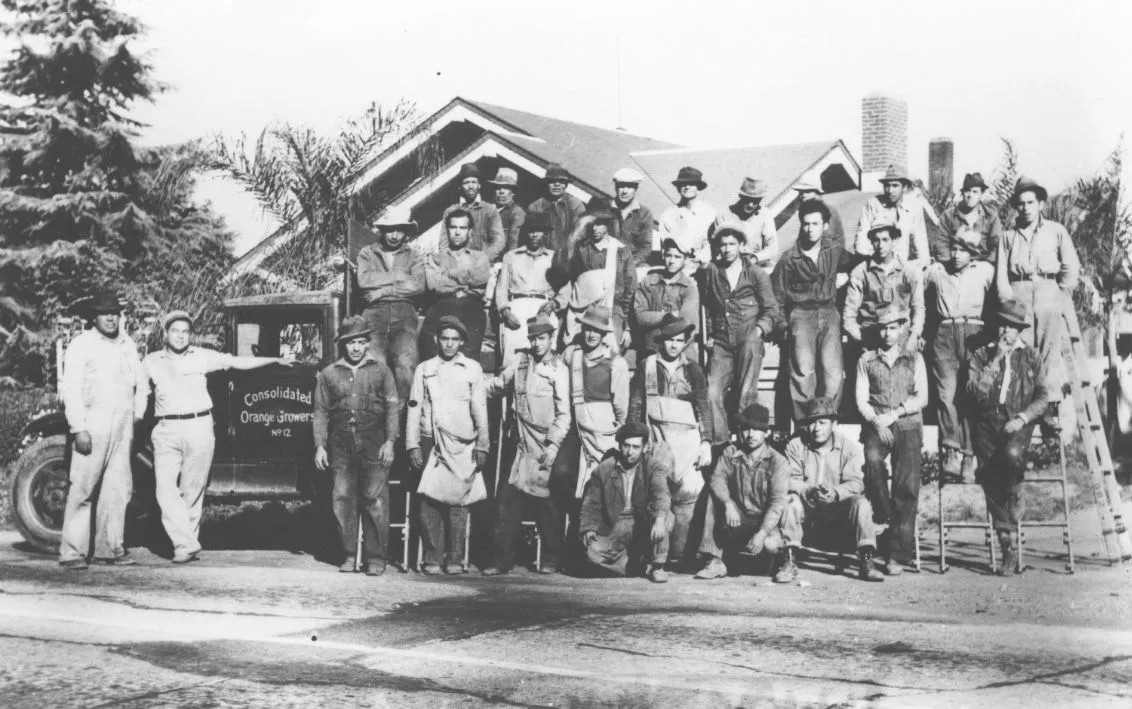
David-James Gonzales, Breaking Down the Walls of Segregation: Mexican American Grassroots Politics and Civil Rights in Orange County, California (Oxford, 2025). Too often, we think of American racial history as black and white. That’s an error and that includes our civil rights history. Gonzales looks at the organizing in Orange County that led to the Mendez v. Westminster, the 1947 case that struck down segregation against Mexican Americans and was a key precursor to Brown. These are the stories that need to be told in order to get a fuller sense of our civil rights history.
Kidada E. Williams, I Saw Death Coming: A History of Terror and Survival in the War against Reconstruction (Bloomsbury, 2023). I’d definitely recommend this book to anyone interested in the topic. Williams writes with such verve about a top topic–the freed people terrorized by the KKK and other white supremacist organizations during Reconstruction and how they survived. The key word is “survival.” You can’t quite say they fought back, though they did. But this isn’t the kind of story that is going to make you feel good or that provides that cathartic release in the end. This was bad stuff and people did what they could to make it through.
Suzanna Krivulskaya, Disgraced: How Sex Scandals Transformed American Protestantism(Oxford, 2025). A fairly straightforward, though valuable, explortation of the many, many prominent sex scandals in American religious history. These ministers sure are a bunch of complete hypocrites, from Henry Ward Beecher to Jimmy Swaggart.
Taylor M. Easum, Chiang Mai between Empire and Modern Thailand: A City in the Colonial Margins (Amsterdam, 2024). A book that I doubt will interest too many general readers, but which is quite good. This is an urban history of Chiang Mai, the major city of northern Thailand, looking pretty in depth at how the city was shaped both in resistance to and in the context of both the expanding power of Bangkok and the colonial intruders who didn’t exactly colonize the country, but who shaped it very heavily in a quasi-colonization. Importantly, Easum rejects the idea that one can only study Thai history with Bangkok at its center and the rest of the nation just outposts.
Amy Godine, The Black Woods: Pursuing Racial Justice on the Adirondack Frontier (Cornell, 2023). At first, I wasn’t sure about a book split into so many tiny chapters, which tend to lend themselves more to popular writing than real considered analysis. But Godine does something extremely useful here. She looks at Gerrit Smith’s famous land grants to black settlers in upstate New York and turns the attention to the actual settlers. Smith, who was one of John Brown’s Secret Six, had plenty of prejudice in his own right and tried to control everything about the shape of his idealized communities. Meanwhile, black families really struggled on this less than marginal land, made their own communities, rejected Smith’s patriarchal attitudes, tried to make it in this very white place, and played an active role in the memory of it all when the fact that John Brown’s farm was there made it a key part of Civil War memory. Smith never could understand why these black New Yorkers either didn’t his land or didn’t do with it what he wanted. He hated slavery but listening to black people was not a strong suit. So this ended up being a really good book that I enjoyed a great deal.
Thomas Dunlap, Saving America’s Wildlife: Ecology and the American Mind, 1850-1990 (Princeton, 1988). This is something of a classic of environmental history that I had reason to revisit. Dunlap shows how ideas of ecology rose in American scientific circles and, focusing on predators and the long-term desire of Americans to eliminate them, how people, including Aldo Leopold and then Rachel Carson began to resist that ideology and started reshaping the American mindset in regards to nature. At this point, not much in here is surprising, but that’s partly because Dunlap made it common knowledge.
Joan Singler, et al, Seattle in Black and White: The Congress of Racial Equality and the Fight for Equal Opportunity (Washington, 2011). A group of CORE volunteers in Seattle got together and decided to write up their history while they still lived. We don’t often center a city such as Seattle in civil rights history, which isn’t so shocking since it’s black population was smaller than many other major cities and it was also far away from California or the east coast media. But activists in the 60s here took on intransigent whites when it came to employment, housing, and education and this is a very solid addition to our understanding of these issues.
Sy Adler, Planning the Portland Urban Growth Boundary: The Struggle to Transform Trend City (Oregon State, 2022). How much detail do you want to know about Oregon land use planning after the passage of the state’s pioneering legislation in the early 70s? How much do you like acronyms? If the answer is a) all the detail and b) I fucking love acronyms, this is the book for you. I’m not really making fun here–this is a microhistory of institutional battles that has a ton of value for the right kind of scholar.
Aaron Goings, Red Harbor: Radical Workers and Community Struggle in the Pacific Northwest (Washington, 2025). Goings writes about the history of his home community around Grays Harbor. Washington, home of significant radicalism in the early 20th century, mostly though not entirely through the IWW and then the state repression against that. This was also a heavily Finnish community so there’s good attention paid to them. This goes through the success of unionization after 1935. It’s a very good labor history, though as I usually wish, I wish it asked more what happened to that radical tradition once the workers actually had a union.
Kelly Lytle Hernandez, Bad Mexicans: Race, Empire, and Revolution in the Borderlands(Norton, 2022). This prize-winning book looks at the Flores Magon brothers and their band of Mexican radicals working on both sides of the border in the years leading up to the Mexican Revolution, which they helped spur but which immediately left them behind. That story is well known, but what Hernandez does here is really focus on the transnational efforts to police them and here she deftly narrates a fascinating story, with an emphasis on the violence any Mexican could face in the United States.
FICTION/LITERARY NON-FICTION
Makenna Goodman, Helen of Nowhere. Published last year, Goodman tells the story of a male professor exiled from his university home. It doesn’t seem to be so much sexual as it is that he is an old-style environmental studies professor who has no tolerance for feminism or any cultural studies and all his younger colleagues loathe him so he resigns. His marriage to one of those colleagues is also breaking up and he decides to look at a house way out in the countryside. There, he meets the realtor, a hippie type, who was friends with the woman who built the house and lived there for years, but who is now in senior living. Yet, the realtor seemingly can also channel said woman and as he reveals himself to her, she offers to do so. This little novel goes in some very unexpected places, including a pretty hilarious ending. Goodman herself is a rural homesteader, which is not a life I have a ton of sympathy with or want to romanticize, but she has enough self-awareness about it to write about it with some critical distance too. She recognizes the binaries in our environmental studies are kind of ridiculous and can’t stand up to much scrutiny. It’s also interesting that given the time of writing and the fact that Goodman is a progressive woman, this does not really demonize our aging male faculty members as a predator or engage in anything like cancel culture, which I don’t get the sense she likes very much. He’s sympathetic in his way too. Maybe he just needs to open himself to true love….leading to said memorable ending.
Zadie Smith, Grand Union. Published in 2019, but made up of stories Smith had published for years before this, this is her first short story collection. Anytime you can enter into Zadie Smith’s mind, it’s worth your time. She’s really engaging in experimentation here and the stories vary widely in style, subject, and quality. There’s brilliant stories and one terrible one (where she riffs on the myth that Marlon Brando, Michael Jackson, and Elizabeth Taylor fled together in a car after 9/11) and some that don’t quite work and some that are above average. Some of the stories are even about writers trying to experiment. In the end, this isn’t the most necessary Smith, but it almost is because here’s a brillant mid-career writer who probably is going to win the Nobel at some point just opening herself up to the public and saying “hey, let’s all experiment as writer and reader together, here’s some stuff.” I appreciated it. Plus there’s a devastating fictionalization of the 1959 racist murder of the Caribbean immigrant Kelso Cochrane, in case you need a reminder of Smith’s power and genius.
Amie Barrodale, You Are Having a Good Time. This 2016 collection of short stories revolves around the awkward person doing the awkward thing and most definitely saying the awkward thing. The central theme is miscommunication, which binds most humans together in a super uncomfortable embrace of weirdness. All the characters overthink their own actions, get in their own way, and miss chances for connection due to their issues. In other words, the human condition explained in mostly funny ways.
Deesha Philyaw, The Secret Lives of Church Ladies. I loved this 2020 collection of short stories (a real short story month for me here) about black women trying to make it in a world where men fuck them over constantly, where families are both beloved and totally disastrous, where religion is central to our lives but also holds us back from true happiness, where women have to make compromises that then transform their lives of their daughters, where both heterosexuality and homosexuality cannot be expressed as the protagonists need so very badly. There are men around, but mostly they are on the periphery. While I am not exactly the intended audience, I really very much enjoyed these finely detailed, sympathetic, and sometimes heartbreaking stories. I’d recommend this to anyone.
Philipp Meyer, American Rust. This 2010 novel about deindustrialized Pennsylvania was widely admired upon its release. I do not agree. It’s not very good. It follows a pair of friends who get themselves into some very bad trouble. One has a sister who has escaped to Yale and a disabled father. One has a mother who is in an on-again, off-again relationship with the local sheriff, who constantly intervenes in justice to get this kind of lost kid off from whatever he’s done. And then things get dark and can they be saved. So it’s a giant metaphor for what has happened to steel towns and other parts of deindustrialized America. But it lacks the courage of its convictions. Even when bad things happen to these characters, something always saves them from the worst possible things happening to them. By the end, there’s even a chance all of them are basically kinda sorta OK, almost as if editors said this would sell better if it didn’t get too dark in the end. The comparisons on the blurbs–Joyce, Faulkner, McCarthy–are all ridiculous. Meyer isn’t really like any of these authors. He’s a good enough stylist and storyteller to keep you turning the pages. But these reviews sound a lot more like people wanting to like a novel that exposed the horrors of forgotten corners of America (a sort of fictional version of a Times story interviewing Pennsylvania voters) than because the novel is as good as advertised.
Len Deighton, Berlin Game. A couple of months ago, I read Deighton’s Mexico Set, which is the second book in his first Bernard Samson series. The books are designed to work completely fine as individual works and it does, but I wanted to go back and read the first one, so I did. Berlin Game comes with fewer surprises if you’ve read Mexico Set of course, but Deighton was such a fine spy writer, precisely because the stakes are so high and so low at the same time. It’s the 80s, so hardly anyone is actually ideological about any of this anymore. But Deighton’s lead character sure hates communism–not as much as his spy wife it turns out–and he loves Berlin, so intrigue around the wall and who is the spy threatening a major intelligence network in East Berlin is the theme here. But the theme is also the class-based society of Britain, since our sorta hero didn’t even go to university, while all the men around him are from the tony upper classes and he’s always reminded of this. I still think LeCarre is the better writer, but boy I am reminded of what bullshit the whole James Bond thing is.
Tessa Hadley, The London Train. I absolutely loved Hadley’s 2022 book Free Love, about a middle-aged woman in 1967 who leaves her husband and stable lifestyle for a hippie, but which ends up really being about her daughter entering into this world and being transformed by it. So I went back to this 2011 book. I don’t think it’s quite as great, but it’s still a more than worthy read. It’s a story of two people in two separate parts. The first is a man, a writer and kind of a bad husband, who has a daughter from his first marriage who he never paid enough attention to. She ends up pregnant and living with some Poles. He finds her and rather than bring her home, he moves in with them, leaving his second family, at least temporarily. The second story is about Cora, a woman who has left a stale marriage but who has struggled to find herself since and is mighty depressed. The final quarter of the book gets into how they two of them had met some years before and entered into a passionate affair that has shaped both their lives since its sudden end. Speaking of ends, I loved the end of this one, as Cora finds her way again in a touching way that avoided cloying or cheap sentimentality but rather showed how sometimes, people realize that maybe they have made mistakes in their relationships because they were off and even if their partner isn’t the most exciting person in the world, well, what if this is as good as it gets and what if that’s OK?
Emile Zola, Thérèse Raquin. A couple times a year, I decide to go back to the 19th century. I had never read Zola before. It was time to solve that problem. I chose Thérèse Raquin, in a recent printing of the novel as it was turned into what looks like a mediocre bodice-ripper with Elizabeth Olson, Oscar Issac, and Jessica Lange that also turned the name of the novel into what the film was called–In Secret, which is also a mediocre name. This is the novel that made Zola famous, in 1867. It is about a couple who fall passionately in love, kill her husband, and then find themselves eaten alive by the guilt. It was controversial, evidently, because it showed that someone could quite easily get away with murder, which made a lot of critics think it immoral Zola smartly marketed himself around that, which made him famous. Good call. But I can’t say I enjoyed reading this. The problem, at least for this modern reader, is that the murder takes place relatively early in the book and so over half of it is the couple’s slow, endless demise into insanity. I’m OK with a demise into insanity, but not over 2/3 of a book. I have no doubt of its historical importance and I can see why someone would reframe this into a movie (no doubt significantly changing the point in the story when the insanity starts), but I’d be unlikely to reread it.
Jessamine Chan, The School for Good Mothers. I mostly hated this widely popular book from 2022. Chan’s debut novel, it hit the big time. Every outlet that might ever talk about motherhood was all in on it. It’s a slightly dystopian present or near future where mothers who don’t raise their kids according to societal standards are placed into a quasi-incarceration system for retraining to see if they can get their kids back. Our protagonist was not a good mother–a Chinese American woman, she was under lots of stress at work after her husband left her and left her kid for an afternoon to get work done and someone called the cops. So that’s the right kind of problem to create for a story like this–not too horrible, but yeah, not great. Some of the characters are truly abusive in this quasi-prison, others just let their kids walk home from school. Now, a book like this is necessary. Parenting standards today are stupid. We are a whole generation of people who were told at age 6 to walk to school alone and we did. Now that people my age are parents (or even grandparents in some cases!), if you let your kid walk to school alone, someone calls the cops. The only difference in terms of safety between now and then is that today it is way, way safer than in 1981. So Jenna Bush Hager and the Oprah Book Club had lots of conversations about “what if this situation was true and what if it is kinda true today, what does it say about me as a mother?” The problem is that the satire is too mild and the context way too underdeveloped. Some compared it to recent Ishiguro novels, but this is nowhere near as satisfying or successful or moving as Never Let Me Go, for example. There’s no real articulation of what proper parenting should or could be, how we got to this point in our society, or what all this says about our surveillance society. Moreover the book–and most of the discussion online and in the media about–totally misses the point that this dystopia is already the case for poor women of color and has been for a long, long time. There’s just no acknowledgement that the state intervenes in the homes of the poor all the time. In short, this is a book for wealthy women who are right that there are double standards for women but who really don’t want to think about the broader implications of their lives or these problems. As you can see, I found this book really, really frustrating.
Google has updated its Maps application, labeling Lake Ontario as Lake America for users in the United States, following an executive order signed by President Trump last week amid an escalating trade war with Canada.
The decision of the tech giant reflects what it did when Mr. Trump renamed the Gulf of Mexico as the Gulf of America last year.
“People using Maps in the U.S. will see ‘Lake America,’ those in Canada will continue to see ‘Lake Ontario,’ and those outside of the U.S. and Canada will see both names,” Google said in its statement.
Mr. Trump’s decision to rename the lake on Thursday was met with derision and shrugs in Canada and across the United States, and sparked a series of online memes and late-night jokes.
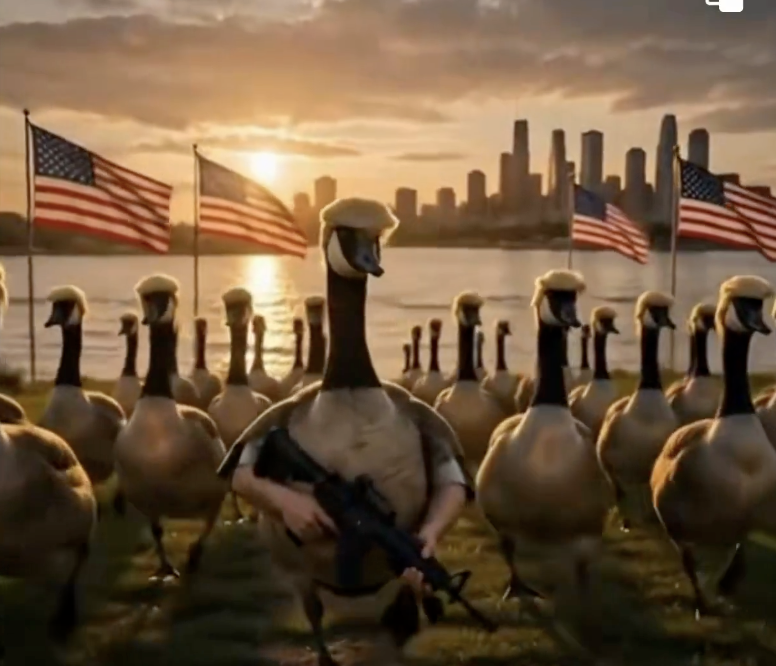
He leaned into his decision, posting an A.I.-generated video depicting geese sporting his signature hairstyle, armed with semiautomatic weapons and shooting the guns under a sign that read “Lake America.”
And Silicon Valley wonders why data centers are so unpopular. I can’t imagine why people don’t trust them in 2026!
 Log in